


Goldfish crackers are a beloved snack for kids and adults alike—but do goldfish cause cavities? This question matters to parents and snack lovers who care about dental health. Goldfish crackers contain starches and a touch of sugar that can linger on teeth, feeding cavity-causing bacteria. While they may seem harmless, frequent snacking without proper oral care can increase the risk of tooth decay. In this article, nhakhoahome uncover the truth about goldfish crackers and cavities, explain how tooth decay develops, and share simple tips to keep your smile healthy while still enjoying this crunchy, cheesy favorite.
NỘI DUNG
What Are Goldfish Crackers Made Of?
Goldfish crackers are more than just a fun, crunchy snack—they’re a carefully formulated food with specific ingredients that can affect dental health. Understanding what goes into these popular bites helps explain why many parents ask: does goldfish cause cavities?
Ingredients Breakdown
The classic Goldfish crackers recipe starts with enriched wheat flour, a source of starch that breaks down into sugars in the mouth. This starch can feed plaque bacteria and lead to tooth enamel erosion if oral hygiene is neglected. Next is real cheddar cheese, which provides flavor and calcium but also contains natural milk sugars. Vegetable oils, such as canola or sunflower, add crunch and mouthfeel, while salt and spices enhance taste. Though marketed as a savory snack, Goldfish include a touch of sugar, making them more cavity-promoting than many realize.
Sugar and Starch Content Comparison
When considering goldfish crackers dental health, the key factor is their carbohydrate profile. Starches from refined flour can be just as risky for cavities from snacks as overt sugars. Compared to cookies or candy, Goldfish have less added sugar, yet their sticky starch can adhere to teeth, creating an ideal environment for bacteria and plaque buildup. Studies cited by the American Dental Association (ADA) show that frequent snacking on foods rich in starch—even if they taste savory—can trigger acid attacks that weaken tooth enamel and raise the risk of tooth decay.
Role of Additives and Preservatives
To stay fresh, Goldfish crackers often contain leavening agents and small amounts of preservatives. While these don’t directly cause cavities, they keep the crackers dry and crunchy, which means particles can lodge between teeth. Combined with snacking frequency and limited saliva production during the day, these traits may indirectly support cavity formation if teeth are not brushed or rinsed promptly.
How Do Cavities Form? The Dental Science Explained
Cavities don’t appear overnight. They result from a chain of biological reactions inside the mouth. Understanding the science behind tooth decay makes it easier to see how snacks like goldfish crackers can play a role.
Role of Sugars and Carbohydrates in Tooth Decay
Every time you eat starchy snacks such as Goldfish crackers, tiny particles of refined carbohydrates and natural sugars remain on the teeth. Oral bacteria feed on these particles and produce acids as a by-product. These acids gradually weaken and demineralize the tooth enamel, the hard protective layer of your teeth. Even foods that seem low in sugar can trigger acid attacks, which explains why does goldfish cause cavities is a common concern among parents and health-conscious snackers.
Plaque, Bacteria & Acid Attack
If food particles are not removed by brushing and flossing, a sticky film of plaque forms. Plaque is rich in bacteria, including Streptococcus mutans, which thrive on the sugars and starches left behind by goldfish crackers and other snacks. As these bacteria multiply, they generate more acid, eroding the dental enamel and creating the first stage of a cavity. Over time, this acid can penetrate deeper layers of the tooth, causing pain, sensitivity, and eventual tooth decay that may require professional treatment.
Why Snack Texture (Stickiness/Crunchiness) Matters
The texture of a snack plays a surprisingly important role in oral health. Crunchy, sticky snacks like goldfish crackers can lodge in the grooves of molars and between teeth. Because starch from these crackers converts to sugar during digestion, the long-lasting contact with enamel provides bacteria with a steady food source, prolonging acid production. Limited saliva production—for example when children snack repeatedly without drinking water—makes it even harder to wash away particles and neutralize acids, increasing the risk of cavities from snacks.
See more: How Many Cavities Is Normal by Age 25?
Do Goldfish Crackers Actually Cause Cavities?
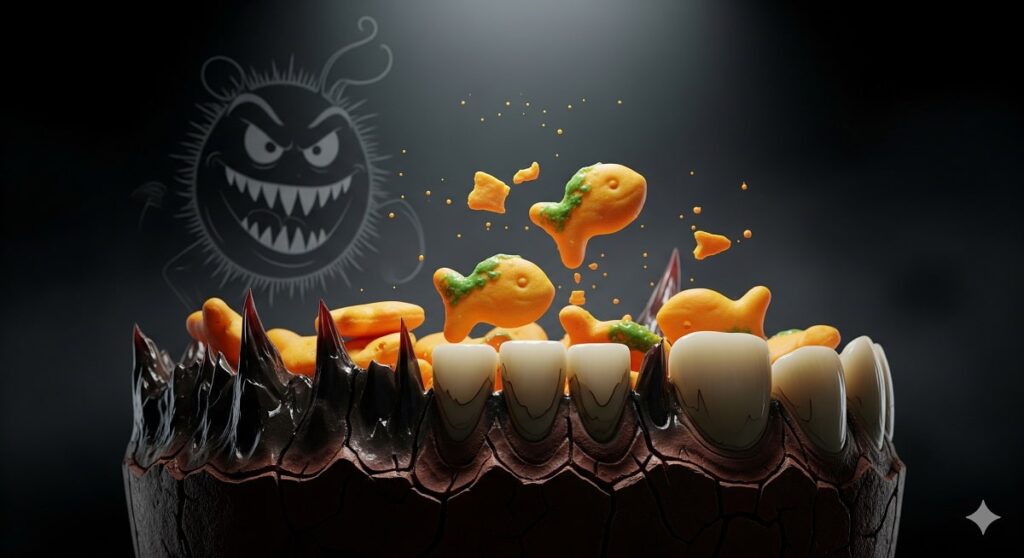
So, does goldfish cause cavities? Yes—if eaten frequently and without proper oral care, goldfish crackers can contribute to cavities. While not the sole cause, their composition of starch and a touch of sugar makes them a potential partner in tooth decay when combined with poor dental hygiene and repeated snacking.
What Research and Dental Authorities Say
Dental professionals, including the American Dental Association (ADA), explain that tooth decay occurs when bacteria feed on carbohydrates and create acid that weakens tooth enamel. Goldfish crackers and cavities are linked because these crackers are made with refined starch, which quickly converts to sugar in the mouth. Even though their added sugar is minimal, the sticky starch clings to teeth, giving plaque bacteria ample time to produce acid. According to pediatric dentists, this acid attack can be as damaging as eating candy if brushing or rinsing is delayed.
Comparing Goldfish to Other Snack Options
When evaluating goldfish crackers dental health, it’s helpful to compare them to other common snacks. Sweet treats like cookies or candy have higher sugar levels and typically pose a faster risk of tooth decay, but some starchy snacks—such as Cheez-It, Ritz crackers, or even Cheetos—behave similarly to Goldfish in the mouth. Because refined starch breaks down into sugar, the difference between a savory cracker and a sweet cookie is smaller than most people think. This means goldfish crackers can be just as cavity-promoting as many sweet snacks if consumed often and left on teeth for extended periods.
See more: Bentonite Clay for Cavities: Natural Tooth Remineralization and Oral Detox
Factors That Increase Risk
Several habits can magnify the risk of cavities from snacks like Goldfish:
- Snacking frequency: Constant nibbling means repeated acid attacks and less time for saliva production to neutralize acids.
- Eating without water: Not drinking water leaves sticky particles on teeth longer.
- Inadequate oral hygiene: Skipping brushing and flossing, especially before bedtime, allows bacteria and plaque to thrive.
- Portion size: Large servings of goldfish crackers increase exposure to refined carbohydrates, encouraging tooth decay.
Real-World Scenarios & Reader FAQs
Snacking on goldfish crackers is part of daily life for many families. But how do real situations—school lunches, late-night cravings, or rushed mornings—affect dental health? Exploring common scenarios helps answer the ongoing question: does goldfish cause cavities and how can we minimize the risk?
Snacking at School or Daycare
Children often enjoy goldfish crackers as a mid-morning or afternoon snack at school. Because classroom routines rarely allow immediate toothbrushing, sticky starches can linger on teeth for hours. This creates ideal conditions for plaque bacteria to produce acid and erode tooth enamel, increasing the chance of tooth decay. A simple solution is to pack a bottle of water so kids can drink or rinse after eating, helping to wash away particles and support saliva production, which naturally protects teeth.
Between Meals and On the Go
Many adults reach for goldfish crackers during commutes, at the office, or as a quick pre-dinner snack. Frequent, small snacking without water can keep acid levels elevated in the mouth, similar to constant sipping of sugary drinks. Over time, this repeated exposure encourages cavities from snacks even if the food seems harmless. Choosing a larger, balanced meal instead of grazing on goldfish crackers throughout the day reduces the number of acid attacks and protects oral health.
See more: Does Ozempic Cause Tooth Decay? Understanding the Dental Risks
After Brushing at Night
A surprisingly risky habit is snacking on goldfish crackers after the nightly brushing and flossing routine. When teeth are clean, saliva flow slows as you sleep, giving plaque bacteria the perfect environment to thrive if refined carbohydrates remain on teeth. Dentists consistently warn that eating goldfish crackers before bed can quickly lead to tooth decay, even if you brush again in the morning.
“My Child Only Eats Goldfish”—What Now?
Parents sometimes struggle with picky eaters who love goldfish crackers and similar starchy snacks. While these crackers can be part of a balanced diet, relying on them as a primary snack raises the risk of tooth enamel erosion and cavities. Pediatric dentists recommend gradually introducing fresh fruits, vegetables, or cheese alongside goldfish crackers, while reinforcing brushing and fluoride toothpaste use to offset the effects of sticky starch.
How to Enjoy Goldfish Crackers Safely
Loving the crunchy, cheesy flavor of goldfish crackers doesn’t mean you have to give up on dental health. With smart habits and good oral care, you can still enjoy them without worrying, does goldfish cause cavities? The key is mindful eating and preventive practices.
Portion Control & Timing Tips
Controlling portion size is one of the easiest ways to reduce the risk of cavities from snacks. Stick to the recommended serving—about one ounce or a small handful—rather than munching straight from a large bag. Whenever possible, eat goldfish crackers with a balanced meal instead of as frequent between-meal snacks. Having them alongside protein or fiber-rich foods stimulates saliva production, which helps neutralize acid attacks and wash away sticky starches that can weaken tooth enamel.
Good Oral Hygiene Habits Post-Snack
Proper cleaning is essential to keeping goldfish crackers dental health friendly. Brushing and flossing soon after eating removes trapped refined carbohydrates and discourages plaque bacteria from forming. If brushing immediately isn’t possible—like after school or at the office—rinsing with water or chewing sugar-free xylitol gum can help reduce acid and support saliva flow. Regular fluoride toothpaste use also strengthens enamel, protecting teeth from the demineralization that leads to tooth decay.
Pair with Protective Foods and Drinks
Dentists often recommend pairing goldfish crackers with foods that help clean or protect teeth. For example, combining them with cheese or yogurt adds calcium and phosphate, which can buffer acids and remineralize tooth enamel. Drinking plain water while snacking helps rinse away sticky particles, while crunchy vegetables like carrots or celery can help mechanically clean teeth and stimulate saliva production. These simple pairings lower the risk of goldfish crackers and cavities without sacrificing flavor.
Limit Snacking Frequency
Even when portions are small, frequent snacking keeps acid levels high and gives bacteria and plaque more opportunities to attack enamel. Aim for structured snack times instead of grazing throughout the day. This strategy allows the mouth to recover naturally and reduces the total number of acid attacks, which is critical for preventing tooth decay from starchy snacks.
Myth-Busting & Final Takeaway
Many believe goldfish crackers are too savory to harm teeth, but that’s a myth. Does goldfish cause cavities? Yes—if eaten often and without proper care. Their refined carbohydrates break down into sugars, fueling plaque bacteria and leading to tooth decay much like sweet snacks. The good news: with smart habits like portion control, drinking water, and regular brushing and flossing, you can enjoy goldfish crackers safely. The final takeaway is simple—goldfish don’t have to ruin your smile if you treat them as an occasional snack and protect your dental health every day.





