


Below gum line tooth decay is a serious dental condition that often develops silently and goes unnoticed until it causes pain or permanent damage. Unlike typical cavities on the tooth surface, this type of decay forms beneath the gum line, directly affecting the tooth root and surrounding tissues. Because it is hidden from plain sight, below gum line tooth decay is harder to detect and can progress rapidly if left untreated. Understanding its causes, early symptoms, and available treatments is essential to protect your oral health, prevent tooth loss, and avoid complex dental procedures in the future.
NỘI DUNG
What Is Below Gum Line Tooth Decay?
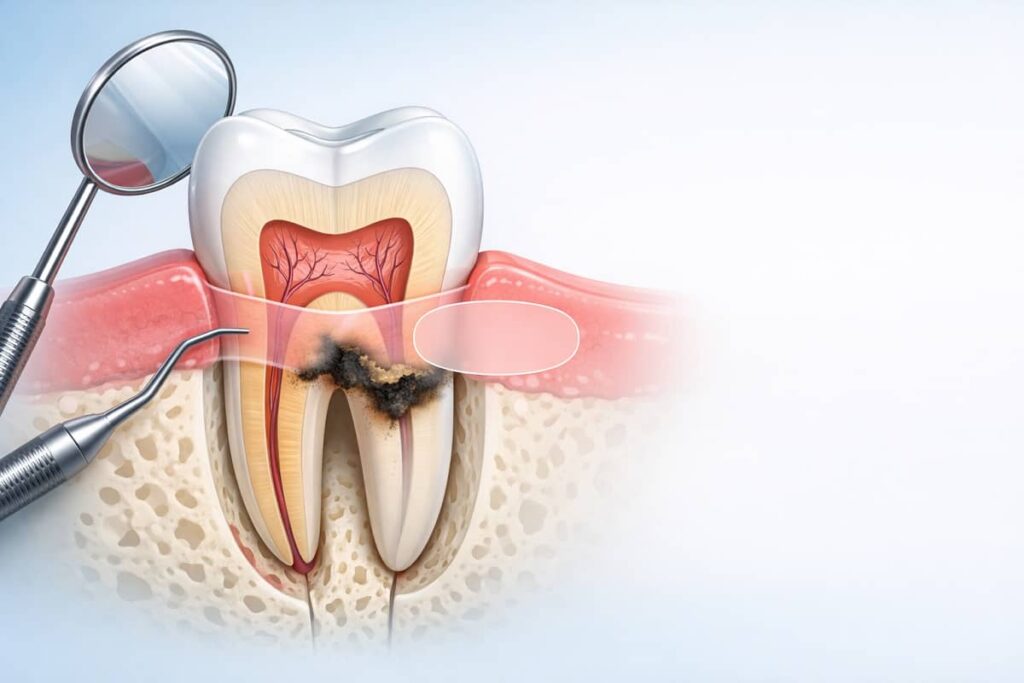
Below gum line tooth decay is a form of dental deterioration that develops on the part of the tooth hidden beneath the gum tissue. Instead of affecting the visible enamel, this type of decay attacks the tooth root, an area protected only by cementum—a much softer layer than enamel. Because of this, damage can occur more quickly and with fewer noticeable warning signs.
How It Differs From Regular Cavities
Unlike traditional cavities that form on the chewing surfaces or between teeth, tooth decay under the gums targets the root surface. Regular cavities usually start with enamel erosion, while decay below the gum line begins where gum recession or periodontal disease has exposed the root. This makes the condition more aggressive and often more difficult to treat.
Why It’s Harder to Detect
One of the main dangers of below gum line tooth decay is that it is largely invisible during routine self-exams. The decay progresses beneath the gums, often without obvious discoloration or pain. In many cases, it is only discovered during professional dental exams or X-rays, by which time significant damage may have already occurred.
Why Tooth Decay Below the Gum Line Is Dangerous
Tooth decay below the gum line is considered particularly dangerous because it affects the most vulnerable parts of the tooth and often progresses without early detection. When decay develops beneath the gums, it can quietly compromise both dental and periodontal health, leading to serious and sometimes irreversible consequences.
Proximity to the Tooth Root and Nerve
One major risk of below gum line tooth decay is how close it forms to the tooth root and nerve. Unlike enamel, the root surface is highly sensitive and lacks strong natural protection. As decay advances, it can quickly reach the pulp, increasing the likelihood of severe pain, infection, and the need for complex treatments such as root canal therapy.
Risk of Infection and Tooth Loss
Because decay below the gum line creates a direct pathway for bacteria, it significantly raises the risk of deep infections. These infections can spread to surrounding bone and tissues, weakening the tooth’s support structure. Without timely treatment, tooth decay under the gums can ultimately result in tooth loosening or complete tooth loss.
Connection With Gum Disease
Below gum line tooth decay is closely linked to periodontal disease. Inflamed or receding gums expose the tooth root, making it easier for plaque and bacteria to accumulate. At the same time, ongoing decay worsens gum inflammation, creating a cycle that accelerates both tooth damage and gum deterioration if left unmanaged.
Common Causes of Decay Under the Gums
Decay under the gums does not happen overnight. It usually develops as a result of multiple factors that gradually expose the tooth root and allow harmful bacteria to thrive. Understanding these causes is essential for preventing long-term damage and maintaining healthy teeth and gums.
See more: Bad Taste in Mouth: Is Tooth Decay the Hidden Cause?
Receding Gums and Exposed Roots
One of the most common causes of below gum line tooth decay is gum recession. When the gums pull away from the teeth, the root surface becomes exposed. Unlike enamel, the root is more vulnerable to bacterial attack, making tooth decay under the gums more likely to develop and progress rapidly.
Poor Oral Hygiene and Plaque Buildup
Inadequate brushing and flossing allow plaque to accumulate along and beneath the gum line. Over time, this plaque hardens into tartar, which traps bacteria and acids against the root surface. This environment significantly increases the risk of decay below the gum line, especially in hard-to-reach areas.
Gum Disease (Gingivitis and Periodontitis)
Gum disease plays a major role in the development of tooth decay below the gum line. As gingivitis progresses to periodontitis, deeper gum pockets form, creating ideal conditions for bacterial growth. These pockets make it easier for decay to spread while making daily oral care more challenging.
Dry Mouth and Reduced Saliva
Saliva helps neutralize acids and wash away food particles. When saliva production is reduced—due to medications, medical conditions, or aging—the mouth becomes more acidic. This increases the likelihood of below gum line tooth decay, as bacteria can multiply unchecked along the root surfaces.
Aging and Enamel Wear
As people age, natural enamel wear and cumulative gum recession expose more of the tooth root. Older adults are therefore at higher risk of decay under the gums, especially if combined with long-term plaque buildup or existing periodontal issues.
Symptoms You Should Never Ignore
The early signs of below gum line tooth decay are often subtle, which is why many people overlook them. However, paying attention to these warning signals can help prevent serious dental complications and irreversible damage.
Bleeding or Swollen Gums
Persistent bleeding or swelling around the gum line may indicate bacterial activity beneath the surface. While these symptoms are commonly associated with gum disease, they can also signal tooth decay under the gums, especially when inflammation does not improve with routine oral care.
Tooth Sensitivity Near the Gum Line
Increased sensitivity to hot, cold, or sweet foods near the gums is a frequent sign of decay below the gum line. This occurs when the tooth root becomes exposed and weakened, allowing stimuli to reach sensitive inner layers of the tooth more easily.
See more: How to Stop Tooth Decay from Spreading: Effective Home Remedies That Work
Persistent Bad Breath
Chronic bad breath or a bad taste in the mouth can result from bacterial buildup trapped beneath the gums. When below gum line tooth decay is present, bacteria continue to thrive in these hidden areas, producing odors that regular brushing may not eliminate.
Gum Recession or Visible Root Surfaces
Gums that appear to be pulling away from the teeth or exposing the root surface are a clear warning sign. This condition not only increases sensitivity but also creates the ideal environment for tooth decay below the gum line to develop and worsen.
Pain When Chewing
Discomfort or pain while chewing may indicate that decay under the gums has progressed deeper into the tooth structure. At this stage, the damage may be approaching the nerve, requiring prompt professional treatment to prevent infection or tooth loss.
How Dentists Diagnose Below Gum Line Tooth Decay
Because below gum line tooth decay develops in areas that are not easily visible, professional dental evaluation is essential for accurate diagnosis. Dentists use a combination of clinical tools and imaging techniques to identify the problem early and determine its severity.
Visual Examination and Probing
During a routine dental exam, the dentist carefully inspects the gum line and surrounding tissues for signs of inflammation, discoloration, or recession. Using a periodontal probe, they measure the depth of gum pockets and check for softened root surfaces. These findings can indicate the presence of tooth decay under the gums, even when no pain is reported.
Dental X-Rays and Imaging
Dental X-rays play a critical role in detecting decay below the gum line. Since this type of decay occurs beneath the surface, X-rays allow dentists to see changes in the tooth root and surrounding bone structure. Advanced imaging helps identify hidden damage that would otherwise go unnoticed during a visual exam.
See more: Sudden Rapid Tooth Decay: Causes, Symptoms & How to Stop It Fast
Periodontal Assessment
A thorough periodontal evaluation helps determine whether gum disease is contributing to below gum line tooth decay. Dentists assess gum health, pocket depth, and bone support around each tooth. This assessment not only confirms the presence of decay but also guides the most effective treatment plan to protect both the tooth and the gums.
Treatment Options for Decay Below the Gum Line
Treating decay below the gum line requires a tailored approach based on how advanced the damage is and whether gum disease is also present. Early intervention can often preserve the tooth, while more advanced cases may need complex restorative procedures.
Scaling and Root Planing
For early-stage below gum line tooth decay, dentists often recommend scaling and root planing. This deep cleaning procedure removes plaque and tartar from beneath the gums and smooths the root surface, making it harder for bacteria to reattach. It also helps reduce inflammation and promotes gum reattachment to the tooth.
Dental Fillings for Root Surfaces
When decay has affected the root surface, specialized fillings may be used to restore the damaged area. These materials are designed to bond effectively to root surfaces and protect against further deterioration. Root surface fillings are a common solution for tooth decay under the gums detected before it reaches the nerve.
Crowns and Restorative Options
If decay below the gum line has weakened a significant portion of the tooth, a dental crown may be necessary. Crowns provide structural support and protect the remaining tooth from further damage. In some cases, crown lengthening procedures are performed to ensure a proper fit and long-term stability.
Root Canal Treatment
When below gum line tooth decay reaches the tooth pulp, a root canal may be required. This procedure removes infected tissue from inside the tooth, eliminates bacteria, and seals the root canals to prevent reinfection. A crown is usually placed afterward to restore function and strength.
See more: Bad Tooth Decay: Signs, Fixes & Prevention Guide
Tooth Extraction (Last Resort)
In severe cases where tooth decay under the gums has destroyed the tooth and surrounding support structures, extraction may be unavoidable. Removing the tooth prevents the spread of infection and protects overall oral health. Dentists may then recommend replacement options such as dental implants or bridges to restore chewing ability and appearance.
Can Below Gum Line Tooth Decay Be Reversed?
Whether below gum line tooth decay can be reversed depends largely on how early it is detected. While advanced decay cannot be undone, early-stage damage may be managed and stabilized with the right professional care and daily oral hygiene.
Early Demineralization vs. Advanced Decay
In its earliest phase, tooth decay under the gums may appear as demineralization of the root surface rather than a visible cavity. At this stage, the damage is limited and the tooth structure is still intact. However, once decay below the gum line progresses into a cavity and compromises the dentin or pulp, reversal is no longer possible, and restorative treatment becomes necessary.
Role of Fluoride and Remineralization
Fluoride plays a key role in strengthening weakened tooth surfaces and slowing the progression of below gum line tooth decay. Professional fluoride treatments, combined with fluoride toothpaste and mouth rinses, can help remineralize early lesions on exposed roots. When paired with improved oral hygiene and regular dental visits, fluoride can effectively halt early decay and prevent further deterioration.
How to Prevent Tooth Decay Under the Gums
Preventing tooth decay under the gums focuses on protecting the tooth root, maintaining healthy gums, and controlling bacterial buildup. With consistent care and professional guidance, the risk of serious dental complications can be significantly reduced.
Proper Brushing and Flossing Techniques
Effective oral hygiene is essential for preventing below gum line tooth decay. Brushing twice daily with a soft-bristled toothbrush and using gentle, angled strokes helps clean along the gum line without causing irritation. Daily flossing or the use of interdental cleaners removes plaque from areas that a toothbrush cannot reach, reducing bacterial accumulation beneath the gums.
Fluoride Toothpaste and Mouthwash
Fluoride strengthens tooth structure and increases resistance to acid attacks. Using fluoride toothpaste and an alcohol-free fluoride mouthwash can help protect exposed root surfaces from decay below the gum line. For individuals at higher risk, dentists may recommend prescription-strength fluoride products.
Regular Dental Checkups
Routine dental visits allow early detection of below gum line tooth decay before it becomes severe. Professional cleanings remove tartar buildup, while exams and X-rays help identify hidden decay. Regular checkups also ensure that gum health is monitored and managed effectively.
Managing Gum Disease Early
Since gum disease is closely linked to tooth decay under the gums, early treatment is crucial. Addressing gingivitis and periodontitis through professional cleanings and improved home care helps prevent gum recession and reduces the risk of root exposure where decay can form.
Lifestyle and Diet Tips
Dietary choices and lifestyle habits play a significant role in preventing decay below the gum line. Limiting sugary and acidic foods, staying hydrated, and avoiding tobacco products help create a healthier oral environment. Chewing sugar-free gum can also stimulate saliva flow, which naturally protects the teeth and gums.
When to See a Dentist Immediately
Seeking prompt dental care is crucial when signs of below gum line tooth decay appear. Delaying treatment can allow the condition to progress quickly, increasing the risk of infection, pain, and permanent tooth damage.
Warning Signs That Need Urgent Care
You should see a dentist immediately if you experience persistent pain near the gum line, sudden tooth sensitivity, or swelling that does not subside. Bleeding gums combined with a foul taste or discharge may indicate an active infection linked to tooth decay under the gums. Additionally, visible gum recession accompanied by discomfort or pain when chewing can be a sign that decay below the gum line has reached an advanced stage and requires immediate professional attention.
Conclusion
Below gum line tooth decay is a serious dental issue that often develops silently but can lead to significant damage if ignored. Because it affects the tooth root and surrounding gum tissue, early detection and proper treatment are essential to prevent infection, tooth loss, and complex dental procedures. Maintaining good oral hygiene, managing gum health, and scheduling regular dental checkups play a critical role in prevention. If you notice unusual symptoms near the gum line, seeking professional care promptly can protect your smile and preserve your long-term oral health.





