


Aspartame tooth decay concerns often arise because it is a widely used artificial sweetener. Unlike sugar, which is known to cause cavities by feeding harmful oral bacteria, aspartame does not provide a food source for these bacteria. Scientific studies show that aspartame is non-cariogenic, meaning it does not contribute to tooth decay or enamel erosion like traditional sugars do. This article nhakhoahome explores the impact of aspartame on oral health, compares it to sugar, and explains why it is considered a safer alternative for maintaining healthy teeth and preventing cavities.
NỘI DUNG
What Is Aspartame?
Aspartame is an artificial sweetener widely used as a sugar substitute in many low-calorie and sugar-free products. Chemically, it is a dipeptide composed of two amino acids, aspartic acid and phenylalanine, linked by a methyl ester bond, making it about 200 times sweeter than sucrose (table sugar). Due to this high sweetness intensity, only a tiny amount is required in foods and beverages, which results in a negligible calorie contribution.
Chemical Composition and Metabolism
Once ingested, aspartame breaks down in the digestive system into its components: phenylalanine, aspartic acid, and a small amount of methanol. These metabolites are naturally present in many common foods, and their quantities from aspartame are much lower than typical dietary sources, ensuring safety at regular consumption levels.
Common Uses of Aspartame
Aspartame is found in a wide range of products, including diet sodas, sugar-free gum, low-calorie yogurts, tabletop sweeteners such as Equal® and NutraSweet®, and various pharmaceuticals. Because of its instability at high temperatures, it is generally not used in baking or products requiring prolonged heat exposure.
Aspartame Compared to Sugar for Oral Health
Unlike sucrose, which is a fermentable sugar that promotes tooth decay by feeding harmful oral bacteria, aspartame is considered non-cariogenic — meaning it does not contribute to dental caries or enamel erosion. This makes it a popular sugar alternative in oral health-friendly products for those seeking to reduce their risk of cavities while enjoying sweetness.
In summary, aspartame’s unique chemical nature and intense sweetness provide a low-calorie, tooth-friendly alternative to sugar, which is why it is favored in many diet and sugar-free formulations worldwide.
Does Aspartame Cause Tooth Decay? Scientific Evidence
The straightforward answer to whether aspartame causes tooth decay is no. Extensive scientific research confirms that aspartame is a non-cariogenic sweetener, meaning it does not contribute to the development of dental caries or tooth decay. Unlike fermentable sugars such as sucrose, which are metabolized by oral bacteria producing acids that erode tooth enamel, aspartame does not undergo fermentation that leads to acid production in the mouth.
Acidogenicity and Oral pH Impact of Aspartame
Studies show that aspartame has minimal acidogenic potential. Clinical trials indicate that aspartame’s impact on oral pH is comparable to water, maintaining pH levels above the critical threshold of 5.5, which prevents enamel demineralization and subsequent tooth decay. This steadiness in oral pH limits the risk of enamel erosion typically associated with regular sugar consumption.
Effects of Aspartame on Oral Bacteria and Plaque
Research demonstrates that aspartame has little to no effect on the oral microbiome, particularly on Streptococcus mutans, the primary bacteria linked to cavities. Preclinical studies even suggest a reduction in these harmful bacteria when aspartame replaces sucrose in the diet. Unlike sugar, aspartame does not serve as a substrate for bacterial fermentation, which helps reduce dental plaque acidification and thus lowers cavity risk.
Comparative Studies: Aspartame vs. Sugar and Other Sweeteners
Animal and in vitro studies consistently show that replacing sugar with aspartame results in fewer dental caries and less enamel demineralization. While aspartame is not actively anti-cariogenic, its primary benefit lies in minimizing exposure to fermentable sugars, effectively reducing the risk of cavities and tooth erosion. Compared to other artificial sweeteners such as sucralose and stevia, aspartame shares similar non-cariogenic properties and is regarded as safe in oral health contexts.
Summary of Scientific Consensus
In conclusion, scientific evidence supports that aspartame does not cause tooth decay. Its low acidogenicity, neutrality in affecting the oral microbiome, and its use as a sugar alternative make it an excellent choice for those concerned about maintaining oral health and preventing dental caries. Ongoing studies continue to explore its full oral health effects, but current research strongly endorses aspartame as a tooth-friendly sweetener option.
See more: How Many Cavities Is Normal by Age 25?
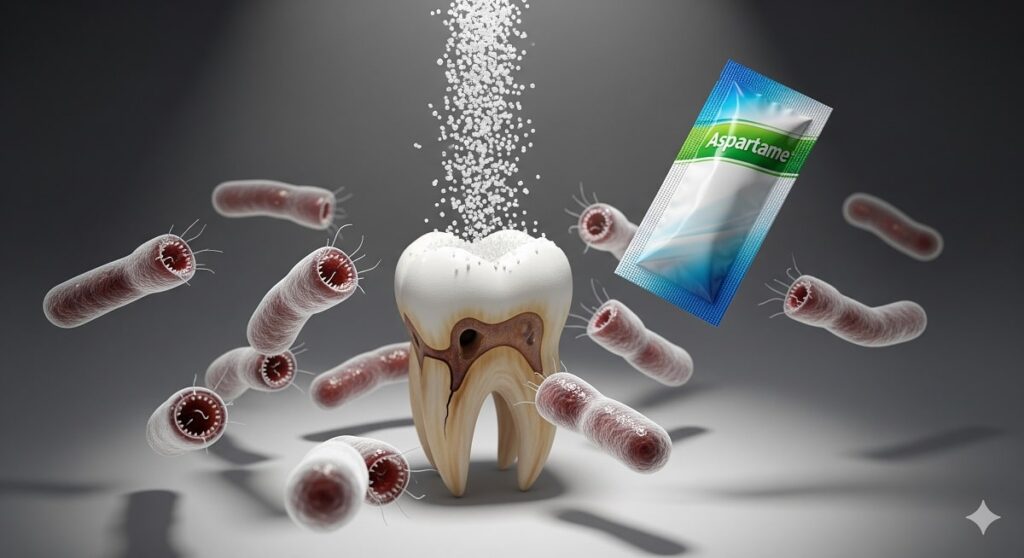
Aspartame vs. Sugar: Which Is Worse for Your Teeth?
When comparing aspartame and sugar in terms of their impact on oral health, especially concerning tooth decay, scientific evidence clearly shows that sugar is far worse for your teeth than aspartame. Sugar (sucrose) is a fermentable carbohydrate that oral bacteria metabolize into acids, which subsequently cause enamel erosion, dental caries, and tooth decay. Aspartame, on the other hand, is a non-cariogenic artificial sweetener that does not feed these bacteria or promote acid production in the mouth.
How Sugar Causes Tooth Decay
Sugar’s role in tooth decay is well-documented. When consumed, sugar fuels cariogenic bacteria such as Streptococcus mutans in dental plaque. These bacteria break down sugar, producing acids that lower the oral pH. Once the pH drops below the critical 5.5 threshold, enamel demineralization occurs, which, if persistent, leads to cavities and tooth erosion. Sugary foods and drinks that are sticky or consumed frequently between meals increase this risk.
Why Aspartame Is Tooth-Friendly
Unlike sugar, aspartame is non-fermentable by oral bacteria. This means it does not contribute to acid formation or create an acidic environment harmful to tooth enamel. Numerous studies confirm that aspartame has low acidogenic potential and does not reduce oral pH to levels that cause enamel wear. By replacing sugar with aspartame in foods and beverages, the risk of developing dental caries is significantly reduced.
Considerations About Acidity and Other Ingredients
While aspartame itself is non-cariogenic, some products containing aspartame, such as diet sodas, may have acidic additives like citric or phosphoric acid. These acids can erode enamel regardless of the sweetener used, so it’s important to consider the overall acidity of the product, not just the sweetener. Meanwhile, sugar-rich products not only lower pH due to acid but also feed bacteria, compounding the decay risk.
Other Artificial Sweeteners and Their Effect on Oral Health
Besides aspartame, there are various artificial sweeteners widely used as sugar substitutes that also impact oral health differently. These include sucralose, saccharin, stevia, xylitol, and erythritol, each with unique properties relevant to tooth decay prevention. Generally, artificial sweeteners are considered non-cariogenic, meaning they do not promote dental caries or enamel erosion, unlike traditional sugars. Understanding how these sweeteners interact with the oral microbiome and affect dental plaque acidification is vital for making informed dietary choices.
See more: Can Adderall Cause Tooth Decay?
Non-Cariogenic Properties of Artificial Sweeteners
Most artificial sweeteners, including sucralose and saccharin, are not metabolized by cariogenic bacteria such as Streptococcus mutans, the primary bacteria responsible for tooth decay. This results in a significantly reduced acid production in the oral cavity. Sweeteners like stevia, derived from a natural plant source, similarly exhibit low fermentability, making them tooth-friendly alternatives to sugar. These sweeteners do not cause the oral pH to drop below the critical threshold for enamel demineralization.
Unique Oral Health Benefits of Sugar Alcohols
Among artificial sweeteners, sugar alcohols like xylitol and erythritol stand out for their additional oral health benefits. Unlike most non-nutritive sweeteners, these compounds can actively inhibit the growth of Streptococcus mutans and reduce dental plaque formation. Moreover, they stimulate saliva flow, which aids in the remineralization of tooth enamel and neutralizes harmful acids, thereby providing a protective effect against tooth decay.
Acidity and Additional Factors in Products with Sweeteners
While the sweeteners themselves are generally tooth-safe, many products containing them, such as diet sodas and sugar-free candies, may have acidic ingredients like citric acid or phosphoric acid. This acidity can cause enamel erosion independent of the sweetener used. Consumers should be aware that the overall formulation of products, not just the sweetener, influences oral health outcomes.
How to Protect Your Teeth While Using Sweeteners
Using artificial sweeteners like aspartame, xylitol, and others can help reduce the risk of tooth decay compared to sugar. However, protecting your oral health requires more than just choosing the right sweetener. Understanding how to maintain proper oral hygiene and minimize acid exposure is essential when consuming sweetened foods and beverages. By following effective strategies, it’s possible to enjoy sweetness while preserving strong, healthy teeth.
Maintain Consistent Oral Hygiene Practices
The foundation of protecting teeth while using any kind of sweeteners is diligent oral hygiene. This includes brushing teeth twice daily with fluoride toothpaste and flossing regularly to remove plaque and food debris that can harbor harmful oral bacteria. Using a fluoride mouthwash can strengthen enamel and help counteract any acid exposure from the diet. Consistent hygiene helps prevent dental plaque acidification and reduces the risk of cavities regardless of sweetener type.
Choose Sugar-Free Chewing Gum with Xylitol
Chewing sugar-free gum containing xylitol after meals stimulates saliva production, which naturally neutralizes acids and promotes enamel remineralization. Xylitol is unique among sweeteners as it can inhibit the growth of cariogenic bacteria like Streptococcus mutans, further protecting teeth. Including xylitol gum as part of an oral care routine can help combat the risks linked to acidic or sweetened diets.
See more: When Can I Drink Soda After Gum Graft?
Limit Frequency and Exposure to Sweetened Foods and Drinks
Reducing the number of times you consume sweetened products throughout the day is important because frequent exposure prolongs acid attacks on tooth enamel. Even non-cariogenic sweeteners in acidic drinks can lead to enamel erosion if consumed excessively. Sipping through a straw and rinsing the mouth with water after intake can minimize acid contact with teeth.
Be Mindful of Product Acidity
Many products with artificial sweeteners, such as diet sodas, sugar-free candies, and flavored drinks, contain acids like citric acid and phosphoric acid that contribute to enamel erosion. Protecting teeth involves awareness of these ingredients and choosing less acidic alternatives when possible. Balanced nutrition and limiting acidic snacks can maintain a healthy oral environment.
Regular Dental Checkups and Professional Care
Scheduling regular visits to a dental professional allows for early detection and management of any enamel wear or potential tooth decay. Professional cleanings help remove plaque buildup, and dentists can recommend personalized strategies for patients who consume artificial sweeteners regularly. Preventive treatments like fluoride varnishes or dental sealants add an extra layer of protection.
Conclusion
Aspartame tooth decay concerns are common, but scientific evidence shows that aspartame does not cause tooth decay. Unlike sugar, aspartame is a non-cariogenic artificial sweetener that does not feed harmful oral bacteria or produce acids that erode tooth enamel. Using aspartame as a sugar substitute can help reduce the risk of cavities and enamel erosion. However, maintaining good oral hygiene and being mindful of acidic ingredients in sweetened products remain essential for optimal oral health. In summary, aspartame is a tooth-friendly alternative for those seeking sweetness without increasing tooth decay risk.





