


Baby bottle tooth decay is a common dental issue affecting infants and toddlers, caused by prolonged exposure to sugary liquids. Many parents wonder, “Is baby bottle tooth decay reversible?” Early detection and proper care can often halt and even reverse initial signs of decay. Understanding how to prevent and treat this condition is essential for maintaining your child’s oral health. In this article, nhakhoahome explore whether baby bottle tooth decay can be reversed, effective prevention tips, and the best treatment options available to protect your baby’s smile for the future.
NỘI DUNG
Understanding Baby Bottle Tooth Decay
What is Baby Bottle Tooth Decay?
Baby bottle tooth decay is a form of early childhood tooth decay that primarily affects infants and toddlers. It occurs when a child’s teeth are frequently exposed to sugary liquids such as milk, formula, or fruit juice, especially when given through a bottle before bedtime or nap time. This repeated exposure allows oral bacteria to produce acids that attack the dental enamel, leading to cavities and decay. Parents often wonder about the best approaches to manage and reverse baby bottle tooth decay, an important topic for safeguarding their baby’s dental health.
Causes and Risk Factors
Understanding the causes of baby bottle tooth decay helps parents take preventative action. The main cause is prolonged contact between the sugars in liquids and the baby’s teeth. Allowing a child to fall asleep with a bottle exposes their teeth to sugar for extended periods, encouraging oral bacteria growth and acid production. Other risk factors include frequent snacking on sugary foods, poor baby dental hygiene tips, and not cleaning the baby’s teeth regularly. The transmission of decay-causing bacteria from caregivers can also increase risk. It’s crucial to recognize these risks early to apply effective baby bottle tooth decay prevention methods and maintain healthy teeth for toddlers.
By familiarizing with these causes and risk factors, parents can better protect their infants from developing baby tooth decay and take timely steps toward treatment and prevention. Early intervention and regular dental checkups play a pivotal role in avoiding the progression of decay and supporting the natural process of dental enamel remineralization.
Can Baby Bottle Tooth Decay Be Reversed?
Understanding whether baby bottle tooth decay is reversible is crucial for parents looking to protect their child’s oral health. The answer depends largely on how early the decay is detected and the treatment methods used.
Early Signs and Symptoms to Watch For
The initial stage of baby bottle tooth decay is characterized by white spots or lines on the teeth, indicating enamel demineralization. These early symptoms may often go unnoticed but are the best time to intervene. If you notice any changes in your baby’s teeth, such as discoloration or sensitivity, it’s important to consult a pediatric dentist promptly. Recognizing the early signs of baby bottle tooth decay and reversal potential is key to successful treatment.
How Fluoride Helps Reverse Early Decay
One of the most effective ways to reverse early childhood tooth decay is through fluoride treatments. Fluoride plays a vital role in dental enamel remineralization, strengthening the enamel and reducing sensitivity to acid attacks caused by oral bacteria. Applying fluoride varnishes or using fluoride toothpaste for toddlers can halt the decay process and, in many cases, reverse the damage before it progresses. Additionally, fluoride supplementation may be recommended by your dentist depending on your child’s risk factors.
Limitations of Reversal and When Decay Becomes Irreversible
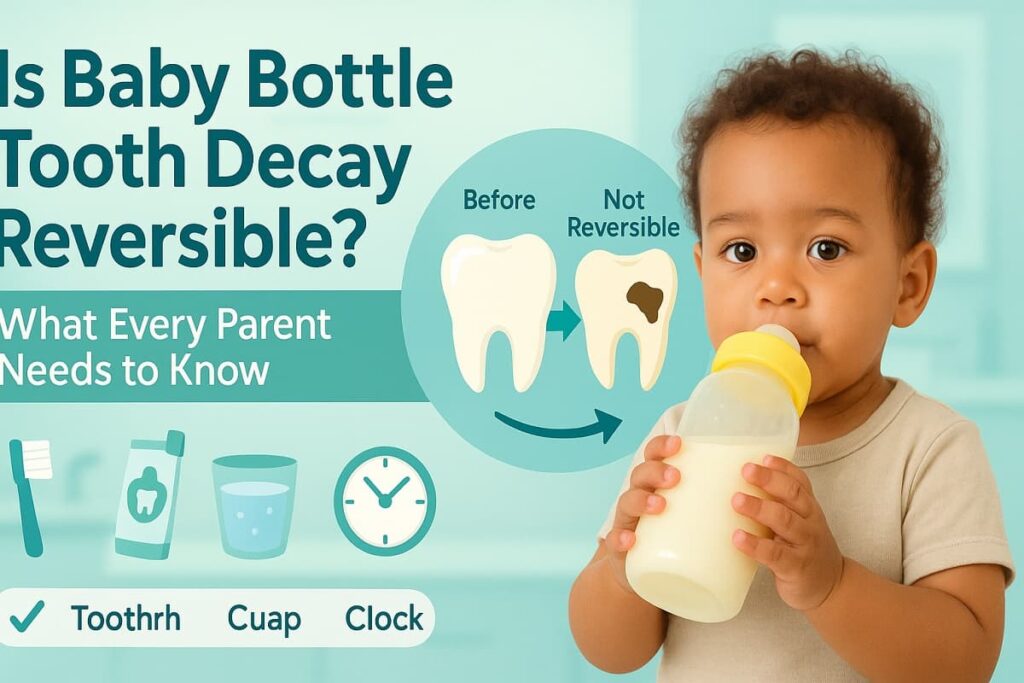
While fluoride and proper oral hygiene can reverse decay in its early stages, once cavities form and the tooth enamel is severely damaged, baby bottle tooth decay treatment becomes more complex. At this point, decay is irreversible, and restorative dental procedures such as fillings or crowns may be necessary. Understanding the limitations of reversal helps parents take swift action, focusing on prevention strategies and early intervention to avoid extensive treatment.
In summary, is baby bottle tooth decay reversible? The answer is yes—but only if caught early and managed with appropriate treatments like fluoride applications and expert dental care. This reinforces the importance of establishing good oral hygiene practices for infants and toddlers and scheduling regular pediatric dental visits to protect your baby’s smile.
See more: Alloy of Mercury Used to Fill Cavities: The Amalgam Explained
Prevention Strategies to Protect Your Baby’s Teeth
Preventing baby bottle tooth decay is crucial to ensure your child’s oral health begins on the right path. The best way to protect your baby’s teeth is by incorporating strong oral hygiene practices for infants and toddlers from an early age. Start cleaning your baby’s gums even before the first tooth appears using a soft, damp cloth. Once teeth emerge, use an age-appropriate toothbrush with a small amount of fluoride toothpaste to gently brush twice daily.
Proper feeding habits to avoid baby bottle tooth decay are equally important. Avoid putting your baby to bed with a bottle filled with sugary liquids such as milk, formula, or juice, as prolonged exposure to these can fuel oral bacteria that cause decay. Instead, offer water in the bottle at bedtime. Limiting sugar exposure is one of the most effective methods to prevent early childhood tooth decay and promote healthier teeth.
Consulting a pediatric dentist regularly is vital in the prevention and early detection of tooth decay. Pediatric dental visits allow professionals to provide customized advice and recommend treatments like fluoride varnish or dental sealants to strengthen your baby’s enamel, supporting the natural process of dental enamel remineralization. The American Academy of Pediatrics oral care guidelines emphasize starting dental visits by the first birthday for effective prevention of baby teeth cavities.
By combining these prevention strategies – consistent oral care, mindful feeding habits, and professional dental guidance – parents can significantly reduce the risk of baby bottle tooth decay and help their children grow a healthy smile free of cavities and dental problems.
See more: How Many Cavities Is Normal by Age 25?
Treatment Options for Baby Bottle Tooth Decay
When it comes to treating baby bottle tooth decay, early intervention is crucial. Parents often ask about effective baby bottle tooth decay treatment options that can save their child’s teeth and prevent further damage. Understanding the available treatments helps in making informed decisions to protect your baby’s oral health.
Fluoride Treatments and Supplements
One of the most effective ways to address early-stage decay is through fluoride treatments. Fluoride helps to remineralize dental enamel, reversing the damage caused by early childhood tooth decay before it becomes severe. Pediatric dentists often recommend professional fluoride varnishes or gels to strengthen your baby’s teeth. Additionally, fluoride supplements may be prescribed when the local water supply lacks sufficient fluoride. Using fluoride properly is a proven method to halt decay progression and even repair minor enamel damage.
Dental Procedures for Advanced Decay
In cases where baby bottle tooth decay has progressed beyond the initial stages, dental procedures become necessary. Treatments such as fillings or crowns may be required to restore teeth affected by more serious cavities. In some situations, extracting severely damaged teeth might be unavoidable to maintain your child’s overall oral health and prevent infections. Pediatric dental specialists are trained to manage these cases with gentle care suited for infants and toddlers, ensuring the best outcome.
Importance of Early Dental Visits and Regular Checkups
Early and regular visits to a pediatric dentist are essential to maintain good oral health and catch any signs of baby tooth decay before they worsen. Pediatric dentists provide expert advice on oral hygiene for infants and toddlers, recommend the best practices for preventing tooth decay, and administer treatments such as fluoride applications when needed. Scheduling your child’s first dental visit by their first birthday is a vital step in preventing and treating baby bottle tooth decay effectively.
Long-Term Implications If Left Untreated
When baby bottle tooth decay is left untreated, it can lead to serious and lasting consequences that affect not only your child’s oral health but also their overall well-being. One of the most significant impacts is on the development of permanent teeth. Decay in baby teeth can cause premature tooth loss, which disrupts the natural alignment and spacing necessary for the proper eruption of adult teeth. This misalignment may result in the need for extensive orthodontic treatment later in life.
Beyond dental structure, untreated early childhood tooth decay can hinder your child’s ability to chew and speak properly. Pain and sensitivity from cavities often cause discomfort, leading to difficulties in eating nutritious food, which can affect growth and development. Furthermore, persistent dental pain may negatively impact a child’s confidence and social interactions, potentially causing emotional distress.
It’s important to recognize that pediatric tooth decay treatment is not only about fixing teeth but also preventing these long-term complications. Early intervention with fluoride treatment, professional dental cleanings, and good oral hygiene habits can significantly reduce the risk of irreversible damage. Avoiding sugar exposure through mindful feeding practices and regular dental check-ups is essential to protect your child’s smile and overall health.
If you notice any signs of decay, don’t delay in seeking advice from a qualified pediatric dentist who specializes in infant oral care and can offer the best strategies to manage and treat tooth decay effectively. Maintaining healthy baby teeth lays the foundation for a lifetime of good dental health.
See more: Can Tooth Decay Cause Dizziness? Understanding the Connection
Conclusion
In conclusion, Is Baby Bottle Tooth Decay Reversible depends largely on early detection and proper care. While initial stages of decay can often be reversed with fluoride treatments and good oral hygiene, advanced decay requires professional dental intervention. Preventing this condition through healthy feeding habits and regular dentist visits is key to protecting your child’s smile. Understanding the signs and seeking timely treatment ensures the best outcome for your baby’s dental health. Taking action early can make all the difference in reversing baby bottle tooth decay and maintaining strong, healthy teeth for your child’s future.





